A sign improves recognition only when people can notice it, read it quickly, connect it with the same visual cues elsewhere, and remember it after passing. By the end, you will be able to plan the audience, location, message, visual system, materials, lighting and maintenance requirements before approving an outdoor branding project.
Key takeaways
- Map every approach route before designing outdoor signage.
- Use one visual system across signs, windows and printed materials.
- Choose weather-resistant materials and glare-controlled lighting for Pune.
- Track recognition through enquiries, directions requests and repeat visits.
Define the Recognition Job Before You Design the Sign
Your outdoor branding should help the target audience recognise more than a name: it should make the right location, entrance, comparison or offer obvious at the decision-making moment. Record whether people arrive on foot, by car, two-wheeler or public transport, then map their approach, viewing direction and next decision.
This defines the job and builds brand recognition; designing one attractive board without that map leaves gaps.
| Sign type | Recognition job | Information to show |
|---|---|---|
| Primary roadside sign | Make the location visible and relevant | Brand name, simple category cue and one high-value action, such as an entrance direction |
| Storefront sign content structure | Confirm the exact business at the entrance | Exact business name and readable logo |
| Directional sign | Guide people to the correct destination | Arrow, destination and distance or floor reference |
| Promotional sign | Prompt a response to a specific offer | One offer, date or call to action |
| Temporary campaign board | Communicate a time-limited message | Short message, validity period and removal date |
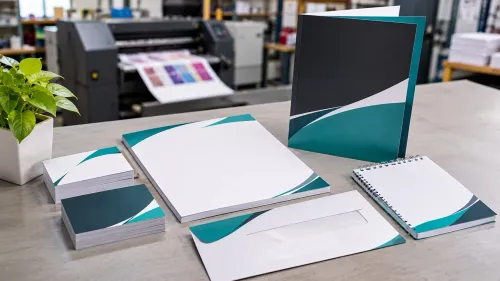
Keep the message hierarchy fixed: brand first, category or benefit second, action third. Use the same logo proportions, brand colours, wording and visual cue at the roadside, entrance, reception and on printed material. Each exposure should confirm the previous one; a new design at every touchpoint weakens recognition.
Choose the Location and Build for a Few Seconds of Attention
A sign position earns attention only if people have enough time and a clear angle to see and read it. Walk the full approach in both directions, on foot and from the road, and record:
- Pedestrian flow, vehicle speed, stopping points, mounting height and sightlines
- Road curvature, junction distance, entrance location and seconds available before a turn
- Trees, poles, parked vehicles, awnings, other boards and seasonal obstructions
- Nearby sign count and sign clutter management opportunities
Do not place detailed copy inside a crowded cluster. Check the design from the actual approach, including the angle used by drivers and pedestrians, rather than approving a desktop proof.
| Approach condition | What to check | Design response |
|---|---|---|
| Daylight | Surface contrast, shadows and background brightness | Adjust face colour, copy and logo scale |
| Rain | Wet glare, reflections and reduced contrast | Recheck legibility with the sign surface wet |
| Darkness | Brightness, disability glare and nearby road features | Set dimming, operating hours and commissioning brightness |
The one-inch-per-30-or-40-feet rule is only a starting estimate. Vehicle speed, shallow viewing angles, weak contrast and short exposure can defeat large lettering; reduce copy before increasing letter size.
Use a heavy but open typeface, generous spacing and strong surface contrast. Make the logo large enough to recognise without competing with the business name. Specify on-site brightness, not maximum wattage alone: excessive luminance can hide pedestrians, nearby signs and road edges.
Create a Consistent Visual System Across Sign Types
Choose three or four brand colours and assign each a fixed job: background, lettering, accent, border and directional arrow. This colour map turns brand consistency into a production rule rather than a designer’s preference.
Approve colour under the lighting people will actually see. Substrate whiteness, gloss, illumination and viewing angle alter perception, so specify a measured spot-colour target or brand-colour tolerance under named measurement conditions—not a photograph or screen proof.
Use negative space around the logo and words. Filling every panel with graphics slows scanning and makes the distinctive element harder to remember.
| Technology | Recognition benefit | Main risk or control |
|---|---|---|
| Non-illuminated printed board | Clear daylight presence with low power and simple maintenance | Poor choice where night visibility matters |
| Front-lit sign | Preserves surface detail and colour texture | Exposed lamps and shadows require careful spacing |
| Backlit sign | Strong evening presence and readable silhouettes | Control brightness and diffusion to prevent hot spots |
| LED or running-letter display | Supports changing messages | Movement, glare and frequent changes can weaken recognition |
Repeat one cue—a colour block, edge shape, icon or letter treatment—on the roadside sign, storefront, directional signs and temporary boards. Freeze that core element while changing only the campaign message.
For white illumination, specify CCT tolerance, chromaticity or colour binning, brightness uniformity and flicker performance. Two products labelled 6500 K can look different because their spectral output and chromaticity differ. Also require dimming and a commissioning brightness; maximum wattage is not a recognition strategy.
Select Materials and Lighting for Pune’s Outdoor Conditions
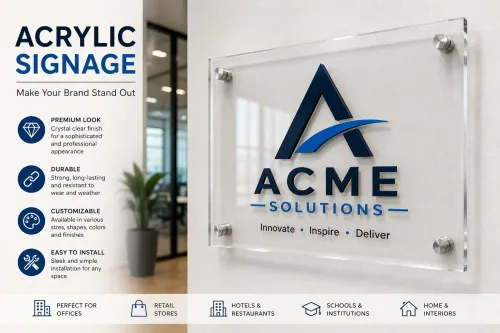
Choose the material by failure risk, not appearance alone. Acrylic sign material suits a clean face, translucency or shaped lettering, but large cast or extruded acrylic faces need thermal clearances and support spacing. Rigidly trapping them can cause bowing, stress cracks or damaged fasteners during Pune’s hot-cold cycles.
| Material | Strength | Watch for |
|---|---|---|
| Acrylic | Clean, translucent, shapeable face | Thermal movement, hot spots and brittle fixings |
| Aluminium | Light, corrosion-resistant enclosure | Heat management, drainage and service access |
| Stainless steel signage | Impact resistance, premium finish, exposed fixings | Greater weight, cost and cleaning effort |
A mixed-material sign can use an aluminium weatherproof enclosure, an acrylic face, separate returns and a steel mounting frame. That arrangement lets you replace one failed part instead of the complete sign. Pantone Media Solutions LLP can help coordinate these interfaces when one project includes fabrication, mounting and illuminated faces.
Do not treat IP65 or IP66 as a durability certificate. IP65 covers dust and water jets; IP66 covers more powerful water jets, but neither proves UV resistance, seal life, drainage, corrosion resistance or immersion performance. Inspect seals, drain holes, fasteners and exposed surfaces after monsoon seasons.
Ask for LM-80 data and TM-21 projections as lumen-maintenance evidence, then ask where the driver sits, how heat escapes, which ambient temperature was assumed and how modules are reached. Edge-lit acrylic needs correct LED pitch, prepared edges and diffusion; extra power makes hot spots worse.
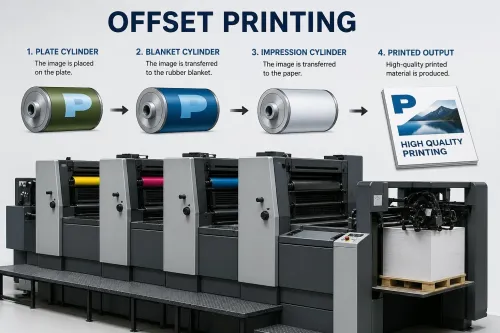
For printed boards, assess ink, substrate, laminate, edge sealing and orientation together. Require wind design to IS 875 (Part 3), covering projected area, mounting height, connections and fatigue.
Related products
 | Outdoor Signage Board Body Material Aluminum Shape Rectangle Usage Outdoor Enriched by our vast industrial experience in this business, we are involved in offering an... View product → |
 | Outdoor Sign Board Usage Outdoor Power Consumption 11W,22W Body Material Acrylic Bulb Type LED Being a well-distinguished company in the market, we are into offering... View product → |
Commission, Maintain and Measure Recognition After Installation
A sign is not finished when it is switched on. Make sign commissioning the acceptance stage: approve a night mock-up or site luminance check, then set a target brightness, dimming schedule and brightness-uniformity requirement. Maximum wattage is not a recognition measure.
1. View the sign from the actual approaches used by drivers and pedestrians, including turning points, nearby signs and dark backgrounds. Check the image through the site’s CCTV cameras; glare or banding that escapes the eye can appear clearly on video.
2. Require flicker control in writing. Ask for the LED driver’s modulation frequency or percent flicker, and test the installed sign with the intended camera system before handover.
3. Adopt an LED maintenance plan covering failed modules, yellowed diffusers, dirty faces, loose fasteners, water entry and colour differences. Small defects create uneven brightness before customers see a complete failure.
4. Demand a handover file containing module and driver part numbers, spare compatibility, cleaning instructions, access arrangements, electrical drawings, warranty exclusions and a defined service response time. Replacement modules must match the installed colour bin and brightness, not merely fit the opening.
5. Keep ISO 7010 safety symbols unchanged; branding must not alter their shape, colour coding or meaning. Retain electrical, fire, building and outdoor-advertising approvals.
6. Measure missed turns, direction questions, visual-cue recall, campaign response and visible fault counts before and after maintenance. These figures show whether recognition improved, not just whether the sign still illuminates.
Related products
 | Outdoor LED Sign Board Usage Outdoor Voltage 110V ~ 220V Material Acrylic Lighting Type LED We have highly acknowledged organization engaged in presenting a remarkable... View product → |
 | Promotional LED Sign Board Material Aluminum, Acrylic Shape Rectangle Power Consumption 12V-48V Installation Wall mounting Thickness 20-50 mm We are one of the most... View product → |
 | Promotional Sign Board Pixels 5mm Pixel Density 40000dots/m2 Material Aluminum Lighting Type LED Shape Rectangular We take pleasure in introducing ourselves as leading firm... View product → |
 | Outdoor Backlit Sign Board Shape Square Lighting Type LED Body Material Aluminum Depth 50mm We have gained a remarkable position in the market that is involved in offering... View product → |