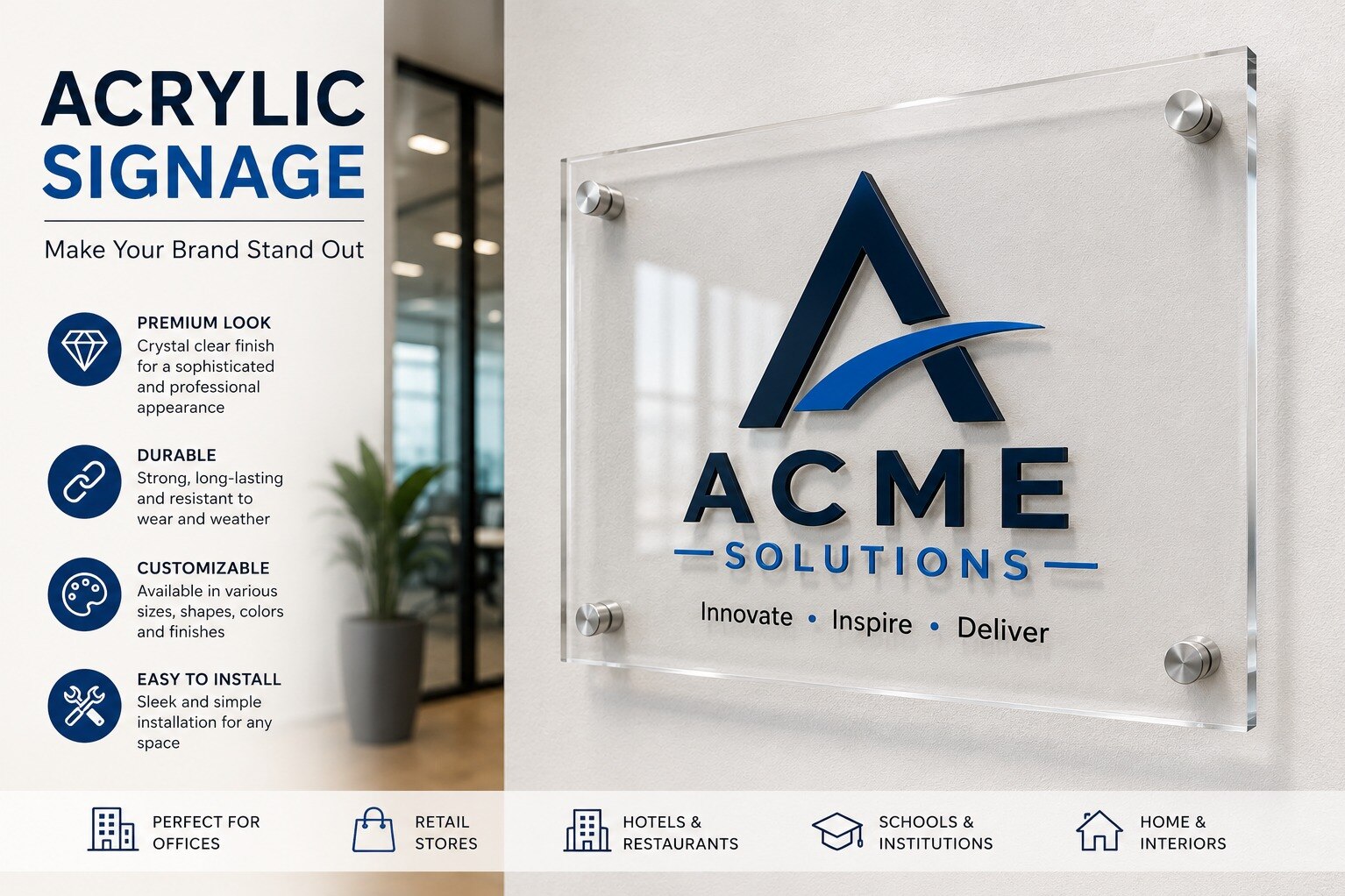
Acrylic works across reception logos, retail fascia, directories and point-of-sale displays because it combines low weight, high light transmission and flexible finishing—but the right result depends on more than choosing “acrylic.” By the end, you will know which finish, thickness, illumination method, mounting system and weather specification fits each location, and how the material compares with metal, glass, PVC, wood and vinyl.
Key takeaways
- Use acrylic for clean, lightweight reception, wayfinding and retail signs.
- Choose gloss for colour impact; choose matte to reduce reflections.
- Match acrylic thickness and mounting hardware to sign size and location.
- Specify UV resistance, sealed edges and drainage for outdoor installations.
Where Acrylic Signage Works Best in an Office or Store
Acrylic works best where a sign needs a clean, dimensional face, controlled colour and low mounting weight: reception branding, interior wayfinding, retail storefronts and point-of-sale displays.
| Application | Why acrylic suits it | Best practical result |
|---|---|---|
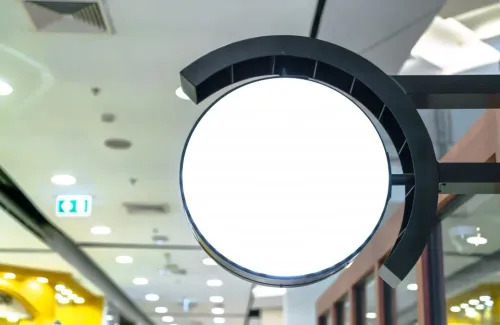
| Acrylic reception logo | It gives a polished, dimensional finish without the mass of glass or metal. | A strong focal point behind the desk, with standoffs, layered letters or concealed lighting. |
| Acrylic wall lettering | It can be cut into precise shapes and mounted flush, raised or on spacers. | Clear department names, meeting-room labels and branded feature walls. |
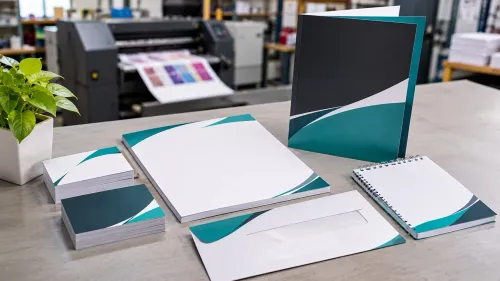
| Office directory panels | Smooth sheets accept printed inserts, vinyl names and replaceable modular sections. | A tidy directory that can be updated without rebuilding the entire sign. |
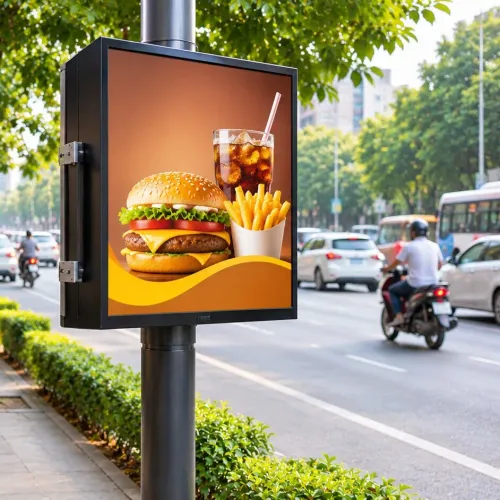
| Retail fascia signage | Coloured, opaque or illuminated faces provide strong contrast from a distance. | A consistent storefront identity across entrances, elevations and shopping-centre units. |
| Counter signs and point-of-sale displays | Acrylic stays light enough for shelves and counters while presenting graphics sharply. | Product messages, offer cards and directional prompts that look more permanent than paper. |
For indoor signs, acrylic is especially useful when customers view the surface at close range. Its smooth face wipes clean, while clear or translucent construction can carry printed graphics or controlled LED illumination without making the sign look bulky.
Use a translucent face when backlighting must appear even. A clear face needs a diffuser, adequate LED setback or an extraction pattern; otherwise customers may see LED dots, wiring or internal shadows.
For an outdoor fascia, treat the panel, frame, anchors and supporting wall as one load path rather than sizing the sign by appearance alone.
Choose the Finish That Controls Appearance and Readability
Finish determines whether the same lettering looks bright, soft, bold or difficult to read. Choose it with the lighting method and viewing distance, not colour alone.
| Finish | Appearance and lighting performance | Readability and suitable use |
|---|---|---|
| Clear acrylic | Passes about 92% of visible light in a thin sheet, creating a bright, glass-like face. LEDs, wiring and internal shadows remain visible without diffusion or adequate setback. | Excellent for layered logos, edge-lit lettering and protected graphics; add a diffuser when LED points show. |
| Coloured acrylic | Adds a strong brand colour, but tint reduces light transmission. Transparent colour glows; dense colour needs front lighting or brighter LEDs. | Good for logos and accent lettering when contrast against the background is high. |
| Frosted acrylic | Scatters light across the surface, reducing hotspots and reflections while giving a satin appearance. | Improves illuminated-face uniformity and suits privacy graphics, room numbers and reception lettering. |
| Opaque acrylic sign board | Blocks light through the sheet, producing a solid, uniform colour with no visible internal components. | Best for non-illuminated signs, printed panels and front-lit letters; it cannot create a glowing face through backlighting. |
| Mirror acrylic | Reflects the surroundings and light, creating a polished, high-contrast decorative effect. | Use for short words or logos in controlled interiors; reflections can overwhelm fine text and reduce legibility. |
Specify the face colour, translucency and surface sheen together. A dark frosted or coloured face can absorb enough light to look dull, while a clear face can expose every LED imperfection. Check the sign at the actual viewing angle before approving the finish.
Acrylic Versus Metal, Glass, PVC, Wood and Vinyl
Acrylic is the stronger choice when you want polished colour, depth, light transmission and lower handling weight; it is the weaker choice where severe impact, abrasive cleaning or heavy structural loading is expected.
| Option | Appearance and weight | Durability and maintenance | Choose it when |
|---|---|---|---|
| Acrylic vs ACP signage | Acrylic looks richer and more dimensional; ACP is flatter, lighter and better for large rigid panels. | Acrylic scratches and cracks at poorly drilled holes; ACP resists dents and weathering better. | Use acrylic for logos, lettering and illuminated faces; use ACP for broad fascia or cladding. |
| Acrylic vs aluminium composite | Acrylic provides clearer colour depth and a more premium edge; aluminium composite suits clean, large-format surfaces. | Both need correct outdoor fixing, but acrylic needs movement allowance and softer cleaning. | Choose aluminium composite for economical exterior panels. |
| Acrylic vs stainless steel | Acrylic is lighter and offers colour, translucency and backlighting; stainless steel delivers a hard metallic finish. | Stainless steel handles impact, heat and frequent cleaning better. | Choose stainless steel for high-touch or industrial locations. |
| Acrylic vs glass signage | Acrylic weighs about half as much as ordinary glass and is easier to fabricate. | Glass resists scratching better; acrylic is safer against shattering but can crack from point loading. | Choose acrylic where mounting weight and illuminated colour matter. |
| PVC, wood and vinyl graphics | PVC is economical, wood is warm and tactile, while vinyl is the lightest and easiest to change. | PVC and vinyl suit short-term graphics; wood needs sealing, and vinyl edges can lift. | Choose them for budget, rustic or frequently updated displays. |
Clean acrylic with water or mild soap and a soft, non-abrasive cloth. Do not treat it like metal: abrasive pads, dry dusting, solvent cleaners, sharp countersinks and over-tightened screws create visible damage or cracks.
Match Thickness, Illumination and Mounting to the Location
Specify acrylic sign thickness by size and support: use 3 mm for a small flat panel, 5 mm for a larger panel, and thicker sheet or a rigid backing when the sign could flex. Flexing causes waviness, cracked paint and uneven reflections.
| Option | Construction and illumination | Best fit |
|---|---|---|
| Flat printed acrylic | 3–5 mm sheet with direct print or applied graphic; no internal lighting | Office entrance panels and indoor retail signs where ambient light is sufficient |
| 3D acrylic lettering | Layered or individually cut faces with stand-off depth; front-lit LEDs if illumination is needed | Reception logos and storefront fascia that need visible shadow and depth |
| Edge-lit acrylic sign | Clear or frosted panel with LEDs in an edge and a graded extraction pattern; request laser dots, micro-prisms or diffuser film | Slim office signs and decorative indoor displays |
| Front-lit lettering | LEDs illuminate the face from the front or within a shallow return; use a diffuser to prevent hot spots | Retail storefronts competing with daylight |
For an office entrance, choose 3000–4000 K for a calm, welcoming appearance; select 4000–4500 K when neutral identification matters. Retail storefronts usually need stronger, glare-controlled output than offices, but increasing LED power alone will not fix banding. Ask for dimming and test readability from the pavement and entrance queue.
Flush mounting gives a clean office finish. Use concealed cleats or mechanical fixings for heavy layered letters, and design a sealed return or cabinet for an exposed storefront. Keep fixings accessible for LED and driver maintenance.
Specify Outdoor Performance Before You Approve the Design
Approve an outdoor acrylic sign only after the manufacturer documents how it will survive sun, rain, wind and temperature changes—not just how it looks in a render.
1. State the exposure: direct or shaded sunlight, monsoon rain, dust, rooftop heat and the sign’s height. For wind design, ask for face pressure, frame reactions and anchor details under IS 875 (Part 3); the wall, frame, bolts and panel form one load path.
2. Specify a UV resistant acrylic sign, then separately confirm the outdoor rating of printed graphics, vinyl, paint, silicone joints, LEDs and power supplies. PMMA handles solar UV well, but its attached components can fade, peel or fail first.
3. Require movement allowance in the acrylic sign mounting. Use stand-offs, slotted holes or flexible seals; never clamp a large panel tightly. Ask for rounded internal corners, polished or properly finished edges, drilled clearance holes and no countersinks or over-tightened screws, because PMMA cracks from point loads and notches.
4. Confirm the fire grade for the exact acrylic formulation and thickness. Ordinary acrylic is combustible and can produce flaming drips, so obtain the project-required fire documentation for escape routes and crowded retail interiors.
5. Put acrylic signage maintenance in writing: use water, mild soap and a soft cloth; prohibit abrasive pads, ammonia, acetone and harsh solvents.
6. Approve a shop drawing showing thickness, joints, diffuser or LED setback, drainage, cable entry and replacement access. Pantone Media Solutions LLP can use that checklist to separate a weather-ready fabrication from a decorative indoor panel.
Related products
 | 3D Acrylic LED Sign Board Body Material Acrylic Shape Rectangle Usage Outdoor Power Consumption DC 12V Lighting Type LED As per the needs and requirements of our clients, we... View product → |
 | Outdoor Sign Board Usage Outdoor Power Consumption 11W,22W Body Material Acrylic Bulb Type LED Being a well-distinguished company in the market, we are into offering... View product → |
Frequently asked questions
Where does acrylic signage work best?
Use acrylic for reception branding, interior wayfinding, retail storefronts and point-of-sale displays where you need a clean, dimensional face and low mounting weight.
Which acrylic finish improves sign readability?
Use a gloss finish for strong colour and visual impact; choose a matte or satin finish when reflections could reduce readability.
How does acrylic compare with metal, glass, PVC, wood and vinyl?
Acrylic offers a lightweight, dimensional appearance with controlled colour; metal suits rugged exteriors, glass provides premium transparency, PVC reduces cost, wood adds warmth and vinyl works well for temporary or flat graphics.
How should you choose acrylic thickness, illumination and mounting?
Match thickness to the sign’s size and unsupported span, select illumination for viewing distance and contrast, and choose studs, rails or direct fixing for the wall surface and load.
What outdoor performance details should you specify?
Specify UV-resistant acrylic, weatherproof lighting, sealed electrical connections, protected edges and drainage so water cannot collect behind or inside the sign.
Related products
 | ACP LED Sign Board Body Material Acrylic Shape Rectangle Usage Outdoor Power Consumption DC 12V Material Acrylic Leveraging the skills of our qualified team of... View product → |
 | Outdoor LED Sign Board Usage Outdoor Voltage 110V ~ 220V Material Acrylic Lighting Type LED We have highly acknowledged organization engaged in presenting a remarkable... View product → |
 | LED Sign Board Shape Rectangular Material Acrylic Lighting Type LED We are presenting an excellent quality assortment of LED Sign Board. View product → |
 | Promotional LED Sign Board Material Aluminum, Acrylic Shape Rectangle Power Consumption 12V-48V Installation Wall mounting Thickness 20-50 mm We are one of the most... View product → |