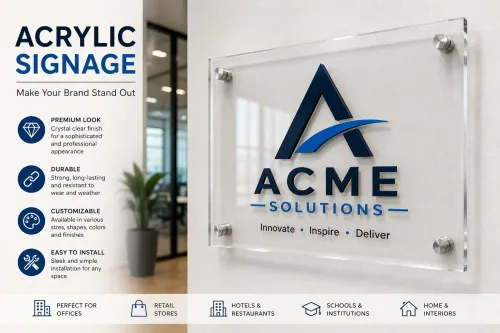

A name plate that looks impressive in a catalogue can still fail when rain, glare, poor contrast, weak fixings or crowded wording meet the real entrance. By the end, you will be able to choose the right material, size, mounting system, lettering and illumination for the location, then give a supplier a specification that can be checked before installation.
Key takeaways
- Choose text size and contrast for the actual viewing distance.
- Use stainless steel or acrylic according to weather, impact and maintenance risks.
- Specify thickness, edge finish, holes, adhesive and mounting hardware before ordering.
- Test lettering and illumination at night if the plate includes lighting.
Start With the Location, Information Hierarchy and Viewing Distance
Decide where the plate will be read and what the reader must know before choosing its design. A home entrance may need a surname, house name and number; an apartment usually needs a resident name and flat number plate. Set the office name plate information hierarchy around the company, designation, department or room number.
A gate or wall may need directional text, not a private phone number unless visitors genuinely need it.
Measure the available width and height, then reserve clearance around the finished letters and the plate edges. Check these before approving the position:
- Door handle, peephole, intercom, lock, gate swing and existing house number
- Footpath, driveway, corridor or road viewing distance
- Letter height, word count and name plate size for that distance
A plate read from a moving vehicle needs fewer words and larger lettering than one read at arm’s length. For room-identification or wayfinding plates, prepare an accessibility brief covering tactile characters, Braille placement, contrast, glare control and mounting height; decorative raised lettering does not automatically provide usable tactile information.
| Location | Information to include | Reading condition | Design priority |
|---|---|---|---|
| Home entrance | Surname, house name, number | Footpath or driveway | Clear hierarchy and weather-resistant contrast |
| Apartment door | Resident name, flat number | Arm’s length or corridor | Compact flat number plate with uncluttered lettering |
| Office entrance | Company, designation, department or room number | Corridor or lobby | Office name plate information hierarchy |
| Gate or boundary wall | Directional text or property name | Passing vehicle | Few words, large letters and strong contrast |
Compare Materials by Weather, Damage and Maintenance Risk
A stainless steel name plate is the safest all-round choice for many inland sites, but the environment decides the finish and grade. Compare each material against rain, ultraviolet exposure, corrosion, staining, scratches and impact before choosing on appearance alone.
| Material | Weather and damage profile | Maintenance risk |
|---|---|---|
| Stainless steel | Grade 304 suits many inland locations. Choose 316 or 316L for coastal air, chloride exposure, de-icing salts or aggressive chemicals. Specify passivation, consistent grain direction and treated edges to limit tea staining, iron contamination and weld discoloration. | Low, but rough horizontal faces and mismatched brushed panels show stains and scratches. |
| Aluminium | Light and corrosion-resistant with a suitable anodised or powder-coated finish. | Isolate it from stainless steel, mild steel and copper hardware, or galvanic corrosion can stain the wall. |
| Acrylic | Cast acrylic is safer outdoors than extruded sheet when dimensional stability and polished edges matter. Ask for thickness and outdoor warranty; drilled holes can craze under stress. | Low cleaning effort, but scratches and impact damage are visible. |
| Brass | Attractive and distinctive, but rain and handling can darken or patinate the surface. | Requires polishing or acceptance of changing colour; useful in sheltered locations. |
| Wood | Warm appearance, but ultraviolet exposure and rain attack unsealed faces and edges. | Seal every surface and renew the coating periodically. |
| Stone or ceramic | Resist rain and ultraviolet exposure and do not rust. | Heavy, stain-prone in porous grades, and vulnerable to chipped edges or impact. |
| PVC | Economical and light. | Check UV stability, surface finish and colour retention before exterior use. |
Ask whether a metal face is genuine brushed stainless steel or aluminium, not printed film. Tie the stated outdoor life to colour, substrate, laminate, application method and edge lift; that detail matters in any brass material comparison.
Match Thickness and Mounting to the Wall, Gate or Door
Choose thickness from the panel’s size and fixing arrangement, not from appearance alone. A large, thin panel can oil-can, vibrate and develop stress around drilled holes. A concealed rail, stand-off studs or rigid aluminium backer can reduce deflection without making the visible face excessively thick.
For reliable name plate mounting, match the fixing to the load and substrate:
- Use screws or anchors for heavy plates, high mounting positions and exposed outdoor walls.
- Check masonry edge distance, anchor pull-out and wind loads before drilling.
- Use spacers when you need shadow depth, airflow or separation from damp masonry.
- Keep a concealed fixing removable where the face, wiring or hardware will need service.
A stand-off name plate should not press against uneven masonry, where trapped moisture can stain the wall or corrode the rear hardware. Provide drainage behind the face and seal cable entries without creating a water pocket.
Adhesive suits a lightweight plate on a sound, smooth substrate. For adhesive name plate installation, remove dust, silicone, oil and moisture; confirm that paint has fully cured; use the specified primer on powder-coated or low-energy surfaces; and follow the stated installation temperature, pressure and dwell time.
Tape labelled “outdoor” will still fail on a damp or freshly painted wall.
Prevent galvanic corrosion by isolating dissimilar metals:
- Separate aluminium from stainless-steel studs with compatible finishes or isolation washers.
- Isolate mild-steel brackets from wet aluminium faces.
- Keep copper-containing hardware from direct contact with aluminium or coated steel.
A concealed rail that remains reachable makes repairs less destructive than a fully bonded assembly.
Choose Lettering, Finish and Illumination for Real-World Legibility
Readable name plate lettering starts with adequate letter height, a medium or bold font, open counters and generous spacing. Avoid thin strokes, ornate scripts and tightly packed words. Increase contrast between letters and the background, then inspect the plate from the actual driveway, corridor or road—not from a close-up proof.
| Option | Depth and feel | Repair and damage considerations |
|---|---|---|
| Flat printed graphics | No depth; clean, flexible layout | Easy to replace, but the print can fade or scratch |
| Engraved name plate | Recessed, tactile letters | Durable face, though dirt can collect in deep cuts |
| Vinyl | Thin applied lettering | Simple to renew; edges can lift or scratch |
| Raised letters | Physical depth and shadow | Strong visual presence; individual letters can be replaced |
| Cut-metal lettering | Separate metal forms with maximum depth | Excellent impact resistance, but repairs and alignment cost more |
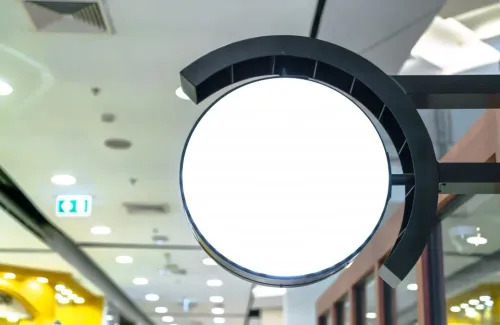
A glossy face can reflect headlights and corridor lighting, while a brushed finish reveals mismatched grain on replacement panels. Specify consistent grain direction. An LED door name plate suits a villa gate, compound wall or office entrance when night visibility matters, but it can disturb neighbours in a quiet corridor or apartment lobby.
Inspect an illuminated sample at the intended letter depth for hot spots and dark corners. Ask for:
- LED package, optical spacing, L70 projection and operating temperature
- Thermal path, driver warranty, constant-voltage output and reserve capacity
- Sealed glands, drip loops, drainage and service access
Pantone Media Solutions LLP can help compare a non-illuminated plate with an illuminated assembly under the site’s actual viewing conditions.
Related product
 | Door Sign Board Lighting Type LED Material Aluminum, Stainless Steel Shape Square Thickness 6mm Size 8.7cm*11.8cm Owing to our in-depth knowledge in this domain, we... View product → |
Turn the Design Into a Verifiable Purchase Specification
Before approving a quote, turn the artwork into a name plate quotation checklist: record finished width and height, panel thickness, material grade, acrylic type, colour reference, surface finish, edge treatment, letter height, font, contrast, illumination level and exact wording. “Same as the sample” leaves costly disputes.
1. List every included component: backing plate, standoffs, anchors, screws, adhesive, power supply and cable concealment. For an IP65 LED sign, record that IP65 covers dust and water jets under IEC 60529, not immersion, trapped water or poor cable entries. Require sealed glands, drip loops and drainage.
2. Add an LED driver specification: constant-voltage output, rated load with reserve capacity, power-factor and harmonic performance where relevant, short-circuit and over-temperature protection, surge immunity, enclosure rating and access method. Do not bury a driver at maximum load in a hot cavity.
3. Request a scale drawing showing clearance from doors, handles, intercoms and house numbers, plus a physical sample when brightness, colour or metal grain matters. Confirm separate replacement of the face, LED modules, driver and fasteners. Reject a heavy or high-mounted plate relying only on adhesive without structural review.
Record cleaning instructions and name plate warranty conditions for fading, corrosion, adhesive edge lift, driver failure and LED brightness. State how the finish and wording will be checked during installation.
Frequently asked questions
How should you decide what information goes on a name plate?
Start with the location and viewing distance. Prioritise the company or house name, then add the designation, department, room number, flat number or other essential detail.
Which name plate material is best for outdoor use?
Compare stainless steel, aluminium, acrylic and other materials against rain, sunlight, impact, corrosion and cleaning needs. Select the material that fits the site’s weather and damage risk.
How do thickness and mounting affect a name plate?
Match the plate’s thickness and fixing method to the surface. Check whether the wall, gate or door needs screws, standoffs, concealed fittings, adhesive or a frame.
How can you make a name plate easy to read?
Use strong contrast, adequate letter height, a clear typeface and a finish that limits glare. Review visibility from the actual approach distance and check illuminated plates after dark.
What should a name plate purchase specification include?
Record dimensions, material, thickness, text hierarchy, letter style, colours, finish, illumination, hole positions, mounting hardware and installation surface so the delivered plate can be verified.