
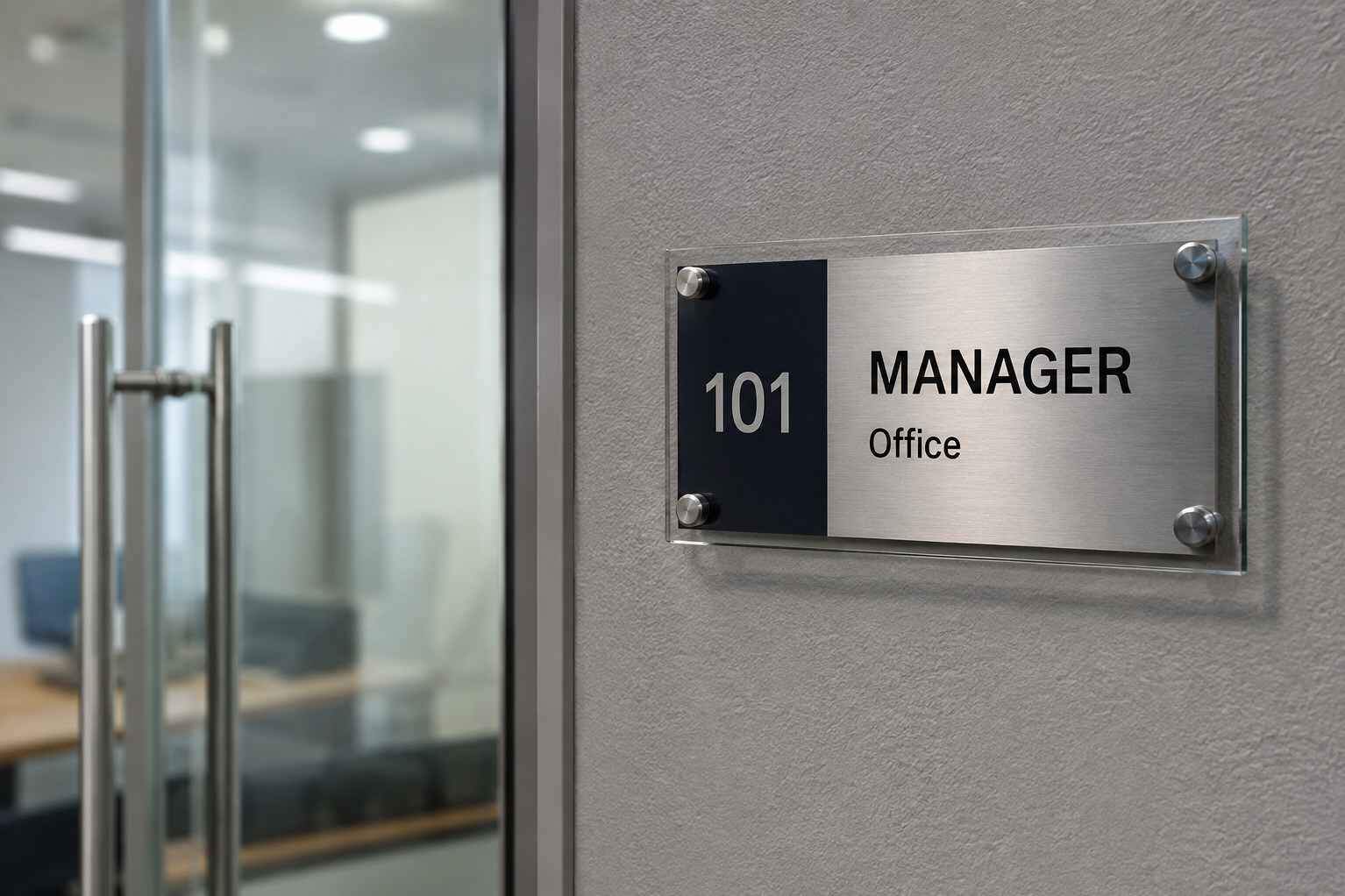
Name plates perform a simple but important function. They identify people, rooms, departments, businesses, residences, and facilities while contributing to the appearance of the surrounding space.
Choosing a name plate based only on appearance can lead to problems with readability, durability, maintenance, or installation. The better approach is to match the material, size, finish, and mounting style to the actual environment.
Start With the Purpose
Before selecting a design, determine what the name plate needs to communicate.
A corporate cabin plate has different requirements from an outdoor company plate. A residential entrance plate serves a different purpose from an industrial equipment identification plate.
Common applications include:
- Office entrances
- Reception areas
- Cabins
- Conference rooms
- Residential entrances
- Building directories
- Department identification
- Industrial facilities
- Institutional premises
Understanding the purpose immediately narrows the available choices.
Indoor and Outdoor Requirements Differ
Indoor name plates are generally protected from direct weather exposure. This provides greater flexibility in materials and decorative finishes.
Outdoor installations require additional consideration.
Sunlight, moisture, dust, rain, and temperature changes can affect materials and printed or applied graphics over time. Businesses in Pune and elsewhere in Maharashtra should therefore check whether the selected material and finishing process are suitable for the intended exposure.
Readability Should Guide the Design
Decorative typography can be attractive, but identification remains the primary purpose of most name plates.
The text should be readable at the expected viewing distance.
Consider:
- Letter size
- Font style
- Contrast
- Background finish
- Lighting
- Mounting height
- Viewing angle
Reception and directional applications generally benefit from clean typography because visitors need to process information quickly.
Select a Finish That Matches the Environment
Modern commercial interiors often use combinations of glass, metal, wood, stone, laminates, and neutral finishes.
A name plate should complement these materials rather than appear disconnected from them.
Stainless steel can suit contemporary corporate environments. Acrylic can support clean modern designs and multiple colour treatments. Other fabricated combinations may be selected depending on the required visual effect.
The appropriate choice depends on both aesthetics and practical use.
Think About Future Changes
Some information changes frequently.
Employee names, room functions, departments, and tenant information may need periodic updates. In these situations, a modular or replaceable system can be more practical than permanently fabricating every element.
Permanent company identification, on the other hand, can justify a more fixed installation.
Check the Installation Surface
Even a well-designed plate can create difficulties if its mounting system is incompatible with the wall or door.
Glass partitions, wooden doors, painted walls, stone surfaces, metal panels, and exterior façades may require different installation methods.
Measurements should also be taken carefully before fabrication.
A Small Detail With a Visible Role
For offices, hotels, clinics, educational institutions, residential projects, and commercial premises across Pune, professionally planned name plates can improve both identification and presentation.
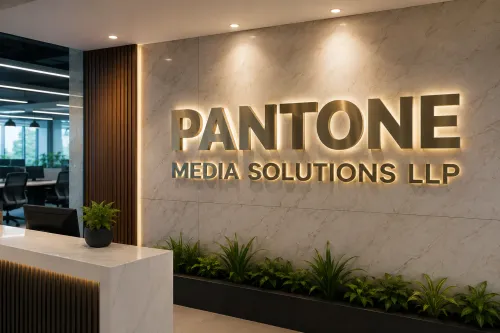
Pantone Media Solutions LLP handles signage and related branding requirements where material selection, fabrication, graphic consistency, and installation need to work together.
The best name plate is not necessarily the most elaborate one. It is the option that remains readable, fits naturally into its surroundings, performs reliably in its environment, and communicates exactly what visitors need to know.